What is a community land trust?
Modern community land trusts (CLTs) can take many forms. Our incorporation allows for a variety of models, including traditional CLTs, rental cooperatives, and more complicated mixed-equity arrangements.
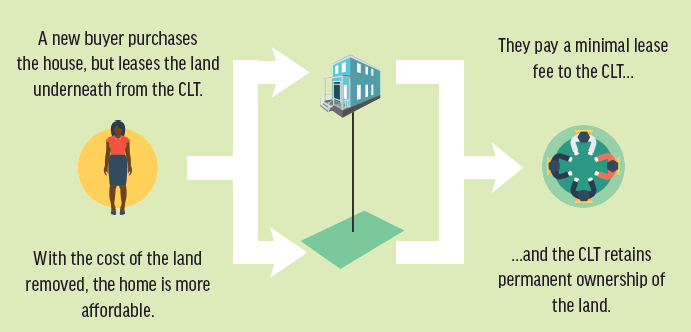
Traditionally, a CLT is an organization that owns and develops land, while separating ownership of the land from the ownership of the buildings on it. At scale, this helps neighborhoods resist the pressures of the housing market, and maintain community control over permanent affordability, while still providing homeowners with equity.
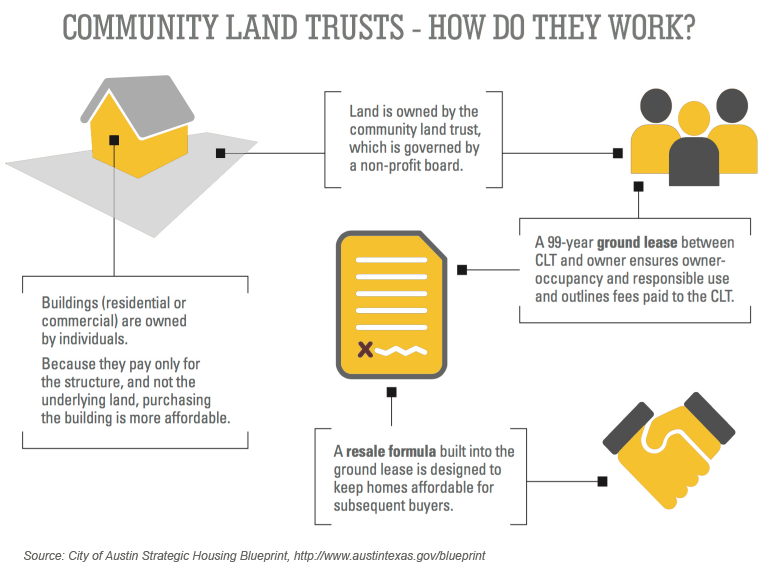
Individuals or organizations can own buildings on CLT land for various uses, including housing. Building owners or users sign a long-term (often 99 years) renewable land lease with the CLT, which limits the sales price of the buildings, thus allowing owners to build equity but also keeping the land (and buildings) permanently affordable.
At the same time, a community-representative board manages the CLT organization in the interest of the community. The Board is often divided into three voting blocks that include CLT land residents, CLT neighbors, and representatives of the broader public interest.
This model has historically been used to allow low-income residents to access home ownership, to build equity, and to ensure community control of equitable development and the permanent affordability of the properties.
In short:
The Community Land Trust acquires land and develops the property, usually housing.
A low-income resident applies to the land trust and purchases the house - but not the underlying land - which remains with the land trust.
Through the land-lease, the land trust and the buyer covenant the maximum sale price of the house, preventing speculative sales, and maintaining affordability in perpetuity.
This process allows low-income home buyers to build equity - an important aspect of building wealth - and to ultimately enter the conventional housing market if they wish to do so.